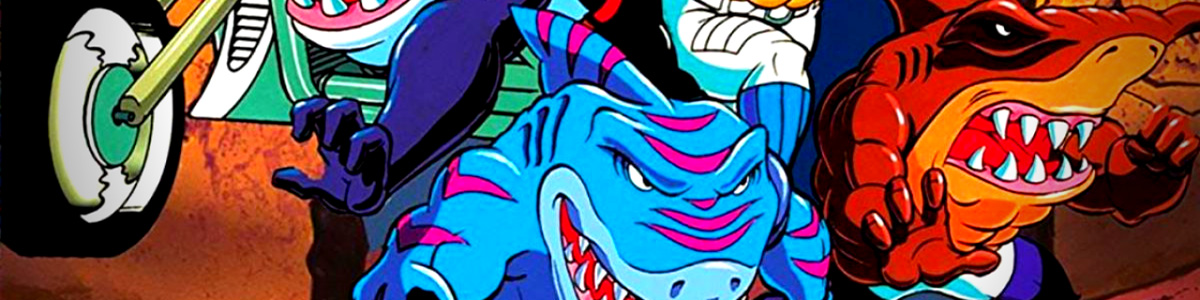
If you grew up in the ’90s, you probably remember those giant sharks with abs of steel, sunglasses and roller skates, spouting phrases like “let’s bite the asphalt!”.
Yes, they were the Street Sharks, a franchise born in the midst of the craze for anthropomorphic mutant heroes, when any muscular creature with a bad-ass attitude could become a children’s idol.
The creation of the franchise
It was in the early 1990s, when David Siegel and writer Joe Galliani prepared a proposal for an animated series and toy line starring mutant humanoid sharks.
As Joe Galliani explains in his interview with Unpunched, the idea struck him while he was doing research at the library: he discovered that children’s books about sharks had waiting lists. That’s when he realized, quite logically, that children are fascinated by sharks.
The interesting thing is that Joe Galliani wasn’t just a freelance screenwriter: he also worked with Mattel, writing speeches for its executives. So, once he had his franchise proposal more or less put together, he showed it to some contacts within the company. And bingo: they loved the idea. Mattel saw its potential and decided to develop it.
At the time, the competition was fierce. Playmates Toys was taking all the credit with its Teenage Mutant Ninja Turtles figures, which were flying off the shelves and dominating toy store shelves around the world.
Mattel, not wanting to be left out of the fun with all those muscular mutants and cool monsters, saw Joe’s sharks as its chance to join the fray. And so the Street Sharks were born. If Playmates had turtles… why not sharks?
The series and the toy line
When it comes to the Street Sharks animated series, let’s be honest: they aren’t exactly masterpieces of the genre. Viewed today from an adult perspective, it’s quite clear that they were created with a very specific goal in mind: to sell toys. The scripts were simple, the animation was just adequate, and everything revolved around showing the characters in action so that kids would want to have them at home.
But of course, when it comes to action figures, things change completely. After all, Mattel isn’t an animation studio—it’s a toy company—and they certainly knew what they were doing. The Street Sharks line features some impressive figures: detailed sculpting, eye-catching finishes, durable materials, and action features that made them a blast to play with.
In addition to the action figures, the franchise also spawned a whole host of merchandise: T-shirts, backpacks, comic books, stickers… It may not have reached the same level of success as the Teenage Mutant Ninja Turtles, but it certainly left its mark. And when something like that takes off, the next step is only natural: more mutants.
Spin-off
Seeing that the mutant sharks were doing so well, Mattel decided to up the ante. What could kids like even more than sharks? Dinosaurs!
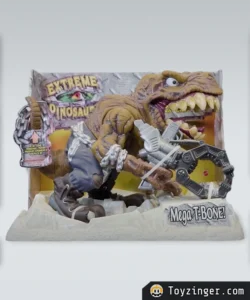
And that’s how Extreme Dinosaurs was born, a spin-off that basically followed the same formula: huge creatures, muscles everywhere, tons of attitude… and, of course, a new line of toys ready to take the world by storm.
Mattel was smart: it used the Street Sharks animated series itself to introduce these new characters. The dinosaurs made their debut in a few episodes, turning both franchises into “sister franchises” that share the same universe and aesthetic.
Even if you weren’t a fan of the show, it’s hard to deny that the toys were really cool. And that’s where Mattel really hit the mark: it turned somewhat generic characters into unforgettable figures.
Many children of that time, myself included, were amazed with them, and now, as adults and involved in the world of vintage collecting, we are eagerly looking for them to add them to our showcases.
This boom in collecting has ushered in a sort of second golden age for the Street Sharks. Their figures have started fetching quite high prices on the secondhand market, and nostalgia has done the rest.
In fact, Mattel has capitalized on the trend and, to mark the franchise’s 30th anniversary, has released reissues of some of the most beloved figures.